Role:
Senior to Lead UX Designer
Scope:
Led UX design or contributed to the suite of 8 distinct modules covering compliance management, surveillance, education, and risk screening.
Responsibilities:
UX strategy, end‑to‑end workflow design, information architecture, interaction and visual design, data visualization, and stakeholder alignment across product, engineering, and compliance subject‑matter experts.
Overview
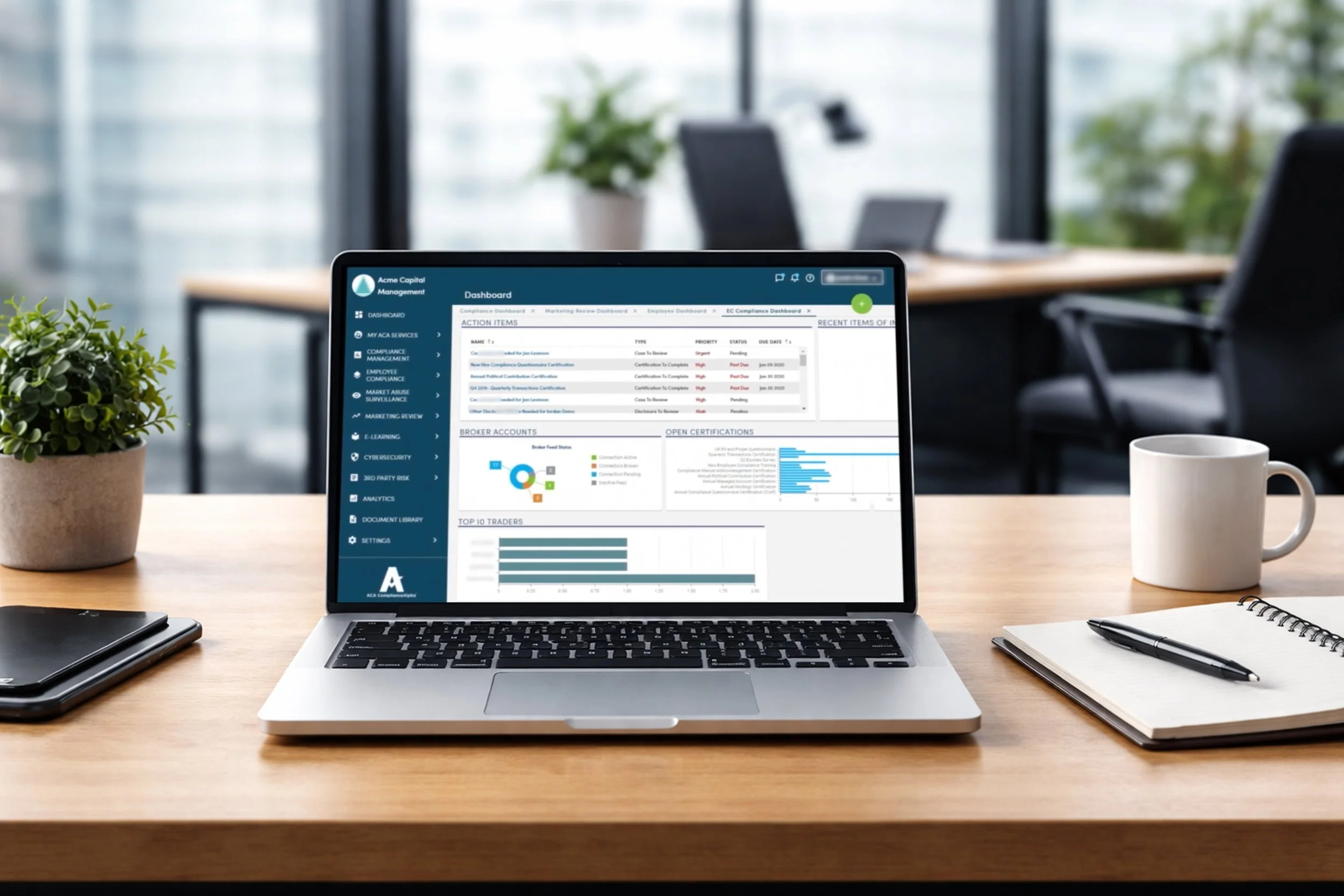
Compliance teams in regulated financial services operate under intense regulatory scrutiny while managing fragmented tools, manual processes, and massive data volumes. As Lead UX Designer, I led the design across three core modules within ACA’s ComplianceAlpha® platform—Compliance Management, Employee Compliance, and Market Abuse Surveillance.
The objective across all three was consistent: transform compliance from a reactive, documentation‑heavy obligation into a clear, proactive, and audit‑ready system that supports confident decision‑making at scale.
Problem
Across compliance functions—regulatory management, employee monitoring, and market surveillance—teams relied on disconnected systems, spreadsheets, and manual review processes. This fragmentation:
• Reduced visibility into risk and compliance coverage
• Increased operational burden and cognitive load
• Slowed investigations and audits
• Elevated regulatory and reputational risk
Teams needed unified tools that could scale with regulatory complexity while remaining usable under pressure.
Goals
• Reduce cognitive load across complex, high‑risk workflows
• Centralize compliance, surveillance, and employee monitoring
• Enable proactive, action‑oriented compliance management
• Reduce false positives and manual effort through automation
• Ensure audit readiness by default across all activities
Users
• Chief Compliance Officers
• Compliance Managers, Analysts, and Investigators
• Surveillance Teams
• Risk and Audit Teams
• Legal and Operations Stakeholders
• Employees submitting trades, disclosures, and certifications
Solutions
-
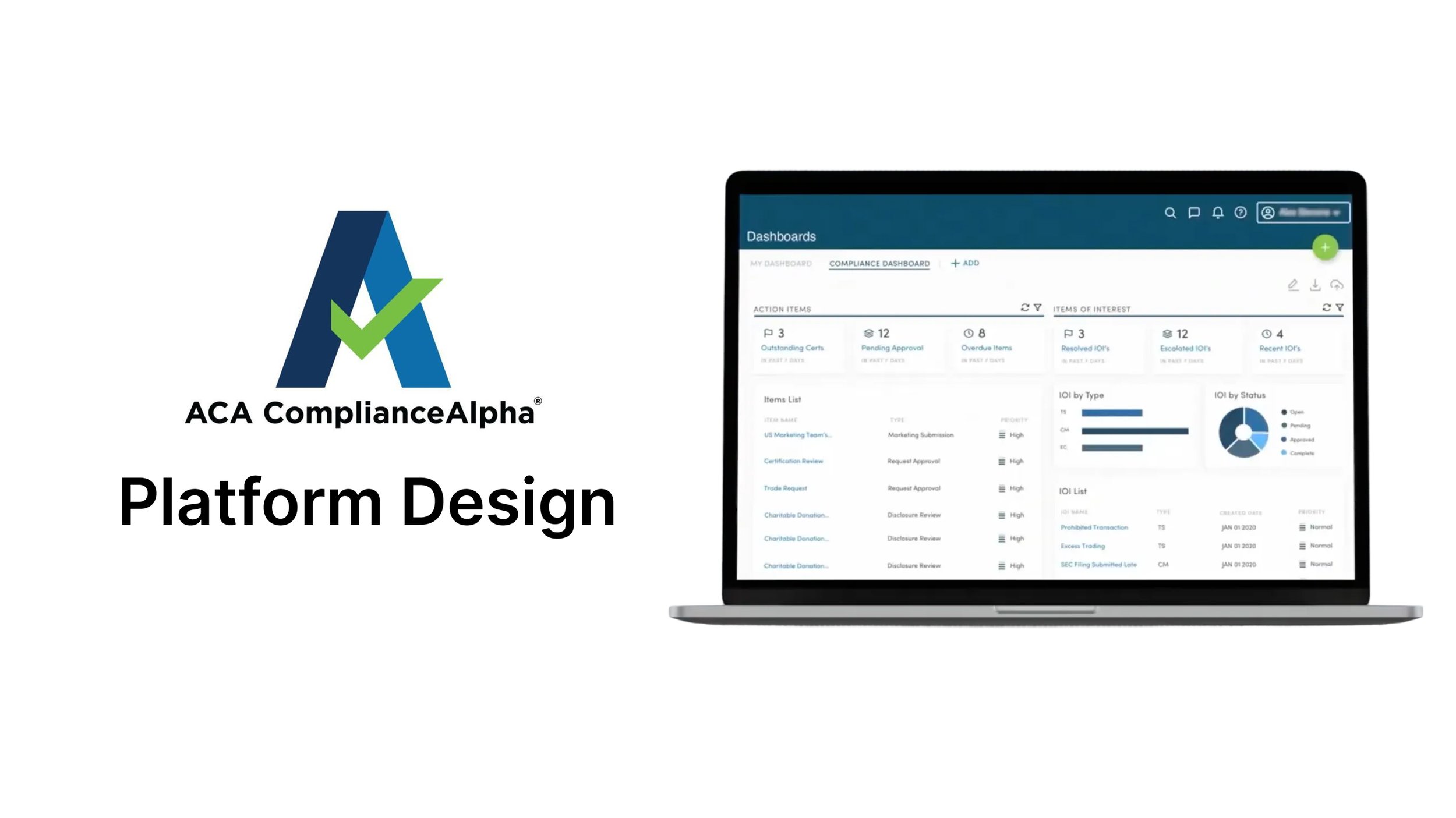
Designed role‑specific dashboards that surface priority tasks, alerts, risk indicators, and program health—allowing users to immediately understand what needs attention without navigating multiple systems.
-
Created clear relationships between regulatory obligations, policies, risks, controls, employee activity, and surveillance alerts. This contextual linking reduced manual reconciliation and improved confidence in compliance coverage.
-
Introduced expert‑maintained regulatory content, automated task assignments, alerts, reminders, and escalation paths. Enabled automated personal trading surveillance, employee disclosures, and algorithm‑driven market abuse detection—significantly reducing spreadsheet dependency and manual review.
-
Designed flexible configuration for firm‑specific policies, surveillance thresholds, blackout periods, and detection logic—allowing expert users to fine‑tune systems while minimizing false positives and alert fatigue.
-
Centralized investigations across employee compliance and market surveillance into structured case workflows where teams can review activity, document findings, escalate issues, and attach evidence with full traceability.
-
Every action—submissions, reviews, decisions, and escalations—is logged with ownership and timestamps, enabling continuous audit readiness rather than last‑minute preparation.
Impact
Reduced manual effort and fragmented workflows across compliance teams
Faster detection, investigation, and resolution of compliance risks
Reduced false positives and alert fatigue
Faster, more defensible audits and regulatory responses
Increased confidence and visibility for compliance leadership
Improved employee experience through simple self‑service workflows